There is a moment in every social initiative when progress is no longer measured only in activity reports, training sessions, or attendance lists. A moment when the impact becomes visible in something deeper: people begin to speak up, to lead, and to engage directly with those who shape policies and systems.
For the B.O.L.D. (Building Organizations & Local Actors Dialogue) Policy Project 2025 was exactly that moment.
The project was never meant to be simply about involving children and youth in activities. Its purpose has always been to empower young people to understand their rights, strengthen their leadership, and build the confidence and skills needed to transform lived experiences into meaningful policy recommendations. In 2025, these efforts came together clearly: youth leadership grew stronger, networks became more structured, and local realities were brought into national-level dialogue.
The Key Milestone: Youth and Decision-Makers in the Same Space
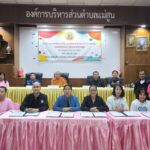
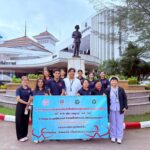
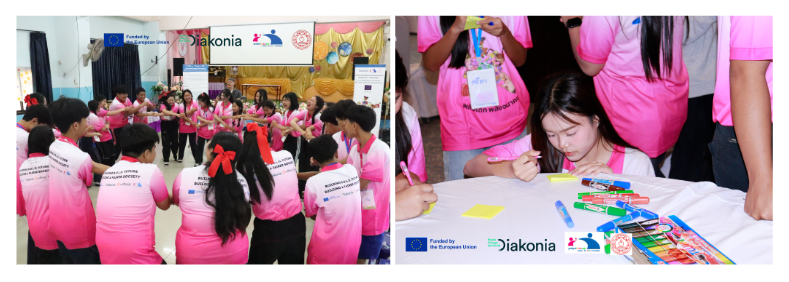
The most significant achievement of 2025 was the 5th Lanna Child Rights Festival, held in November in Chiang Mai. The festival was not simply another event; it became a policy dialogue platform where youth leaders, civil society organisations, local authorities, and national-level duty bearers met face-to-face.
The scale of participation reflected the importance of this milestone. A total of 291 participants attended the festival, including 166 child and youth leaders, as well as representatives from civil society, state agencies, and local authorities. Most importantly, the youth recommendations were shared beyond the festival. They were handed over to key national-level policy-making bodies and duty bearers as a symbolic step toward policy engagement, supported by photo documentation.
The policy inputs were consolidated around four key thematic areas that strongly reflect young people’s daily realities:
- sexual and reproductive health and rights,
- elimination of online sexual violence, exploitation, and trafficking,
- protection of the rights of children of migrant workers,
- children’s rights and the environment, including biodiversity and climate change.
These issues are not abstract. They are urgent, lived concerns, areas where children and youth often face the consequences of structural gaps, inequality, and limited access to protection and participation.
Behind the Numbers: Meaningful Participation
Throughout 2025, the project not only delivered activities, but it also supported a real process of transformation. Several results highlight the scale and effectiveness of this work:
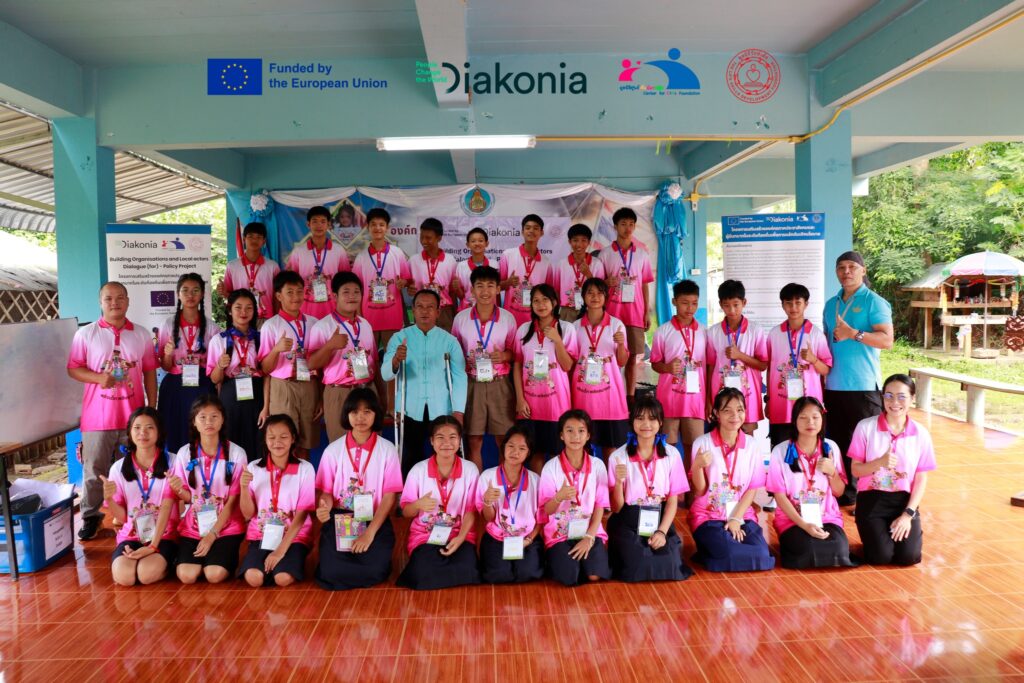
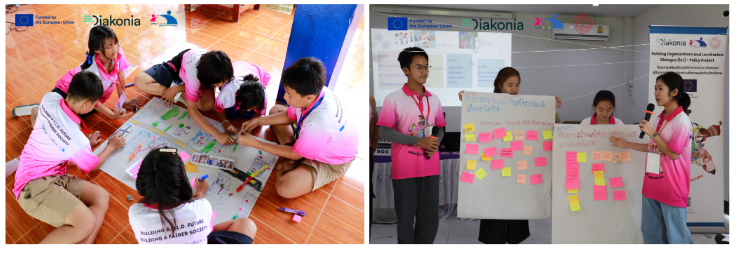
A total of 321 child and youth leaders participated in training activities across 11 sub-districts in three provinces: Chiang Mai, Chiang Rai, and Mae Hong Son.
At the Lanna Child Rights Festival, 94.6% of respondents reported at a high to very high level that the festival provided meaningful opportunities for children and youth to raise their voices directly to duty-bearers.
The project also strengthened public outreach. Between October and December 2025, project communication through Facebook reached 147,344 people, generating 16,856 engagements.
But impact is never only about numbers. It is also about stories, and 2025 brought forward powerful ones.
A Story That Reflects Many Others
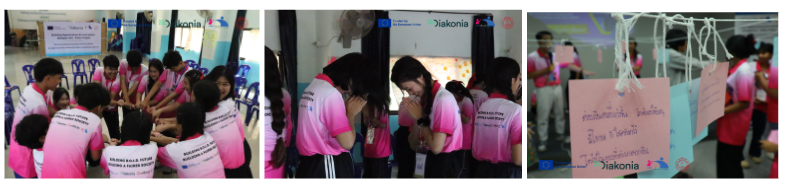
One of the most inspiring youth leaders supported by the project is Nam Ngiao. She joined the B.O.L.D. Policy Project in 2024, at a time when her life was shaped by strict family boundaries and limited opportunities to fully express her identity. Her social space was narrow, and her ability to participate in activities outside of school and home was restricted.
Through continuous involvement in the project, Nam Ngiao gained opportunities to learn, connect, and build leadership. She participated in capacity-building activities and policy dialogue platforms, gradually moving from being a participant to becoming a representative voice of her community.
She described her experience with a quote that captures the spirit of the project:
“The small voices of children today are the power to transform society tomorrow.”
Her development was recognised not only within the project, but also by a wider network of stakeholders. In 2025, Nam Ngiao was selected as the new President of the Child Rights Youth Activists Network (CRYA), with a three-year term.
Her story matters because it reflects what the project truly aims to achieve: not charity, but empowerment—building structures where young people can speak for themselves, supported by communities and institutions that take their voices seriously.
Partnerships Creating Systemic Impact
One of the strongest lessons from 2025 is that child rights work cannot be carried out by civil society alone. Sustainable change requires collaboration between youth networks, CSOs, local authorities, and government institutions.
The festival demonstrated this multi-stakeholder approach clearly. Representatives from local and national-level agencies, civil society organisations, community-based organisations, and youth networks came together. The project therefore acted as a bridge—connecting local child rights realities to national policy processes.
Looking Ahead to 2026: From Recommendations to Action
A key learning from 2025 is that youth participation must go beyond speaking out. Recommendations need to be followed up, monitored, and integrated into real policy and implementation frameworks.
In 2026, the project will focus on systematically following up on the policy recommendations generated in 2025, supporting youth-led advocacy campaigns at the local level, and strengthening the partnerships and participation mechanisms already established. The goal is to ensure that youth engagement becomes a long-term structure, not a one-time opportunity.
Conclusion: When Youth Voices Become Collective Power
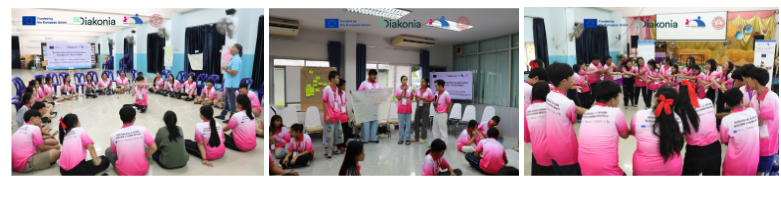
The B.O.L.D. Policy Project in 2025 demonstrated something essential: children and youth are not only the future; they are part of the present. When given space, support, and trust, they can identify challenges, articulate structural issues, and engage responsibly with decision-making processes.
The question is not whether young people have something to say.
The question is whether we, as adults, institutions, and communities, are ready to truly listen.
The project in the post was funded by the European Union. Its contents are the sole responsibility of the Life Skills Development Foundation (TLSDF), and do not necessarily reflect the views of the European Union.
#ChildProtectionFoundation #Diakonia #EuropeanUnion #EUProject #YouthPower #ChildrenAndWomensRights #TLSDF #RakDek