What SUFASEC Achieved in Northern Thailand
Bo (pseudonym) is 18 years old. She lives in Chiang Mai province in a household of eight people, where financial insecurity has been a constant reality since the COVID-19 crisis. Like many young people in Northern Thailand, she grew up in an environment where risks were present but rarely named. Online grooming, manipulation, and sexual exploitation were not openly discussed, and children were often expected to “stay safe” without being equipped to recognise danger.
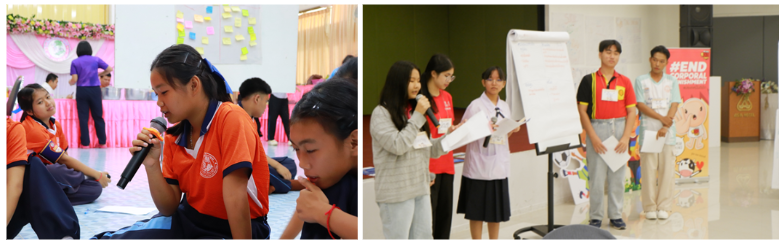
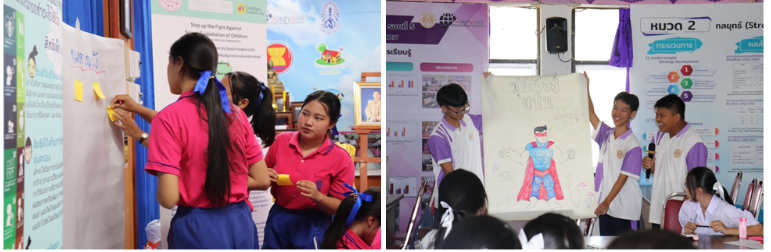
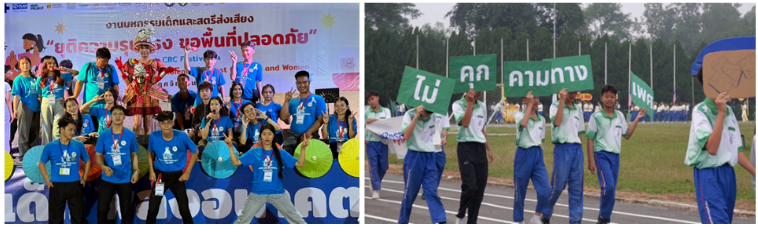
Through SUFASEC (Stepping Up the Fight Against Sexual Exploitation of Children, 2023–2026), Bo became part of something different. As a member of the SUFASEC Children and Youth Council, she helped lead peer-to-peer awareness activities in her school and community. She contributed to the creation of a Youth Corner, a confidential space where students could seek advice, ask questions, and be referred to support services when needed. Bo’s story illustrates what SUFASEC set out to achieve: shifting young people from passive recipients of awareness to active actors in child protection.
SUFASEC was implemented in Fang, Pang Mapha, and Chiang Khong districts in Northern Thailand, areas shaped by complex vulnerabilities including poverty, migration, and statelessness. These realities create barriers to education, health services, and child protection systems. At the same time, digital risks are rapidly increasing. The programme’s Year 3 Narrative Report highlights growing exposure to online grooming and online sexual exploitation, reflecting broader national concerns about OCSEA (Online Child Sexual Exploitation and Abuse).
In such a context, prevention cannot rely on one-off training sessions or awareness campaigns alone. The Endline Outcome Evaluation confirms that sexual exploitation is driven by a combination of harmful social norms, limited protective environments, and weak institutional coordination. SUFASEC responded through an integrated approach designed to influence behaviour, strengthen services, and support local accountability systems at the same time.
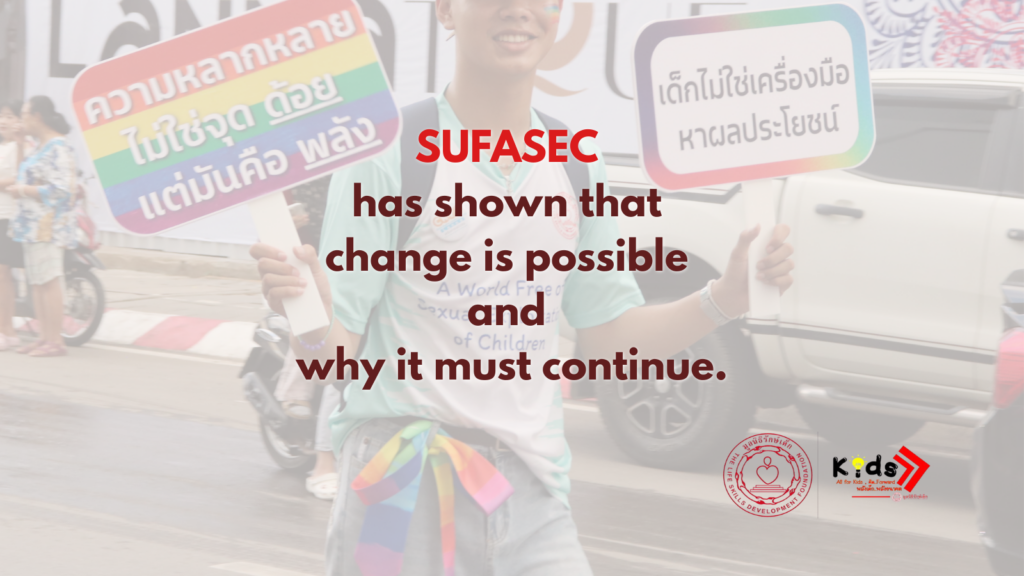
At the level of children and youth, SUFASEC produced clear evidence of change. The Narrative Report documents that young people increasingly speak publicly about grooming, consent, and online risks through school assemblies and peer-led activities. It also notes reduced victim-blaming behaviors and greater normalisation of seeking SRHR information and services, including access to condoms without stigma. This matters because silence is one of the strongest drivers of exploitation. When children gain language, confidence, and peer support, prevention becomes possible in everyday life, not only in workshops.
The programme also contributed to measurable shifts among caregivers. Both the Narrative Report and the Endline Evaluation describe movement away from punishment-based parenting and toward dialogue-based approaches, with caregivers reporting increased willingness to talk openly with children about sexuality, online behaviour, and safety. These changes are foundational, because family communication strongly influences whether children seek help early or remain silent until harm escalates.
One of SUFASEC’s most effective innovations was the establishment of Youth-Friendly Corners in schools. These spaces functioned as trusted entry points for counseling, SRHR information, and referral. The Endline Evaluation reports that students described Youth-Friendly Corners as safe and confidential, and teachers observed increased help-seeking behavior from students experiencing distress or online harassment. This is not a minor outcome. In many settings, children do not report exploitation because they do not know where to go, or they fear punishment and exposure. Youth-Friendly Corners reduced those barriers by making support visible and accessible.
SUFASEC also contributed to system-level progress through engagement with District Quality of Life Committees. This governance entry point helped elevate child protection concerns into formal planning processes. In Pang Mapha district, adolescent pregnancy prevention was adopted as a district priority for the 2026 planning cycle, following evidence-sharing and structured dialogue between civil society actors and duty bearers. The Endline Evaluation confirms that this kind of integration is a critical step toward sustainability because it moves SEC prevention from “project activity” into local governance responsibility.
At the same time, SUFASEC’s learning is clear: systems remain fragile when institutionalisation is incomplete. The Endline Evaluation notes that referral pathways are still often informal and dependent on personal relationships rather than standardised procedures. It also highlights limited budget allocation and continued reliance on individual champions. These challenges are not unusual in child protection work, but they underline an important truth: prevention and response systems require long-term investment, not short-term pilots.
SUFASEC also produced unintended effects that reflect genuine progress. Increased awareness and trust led to increased reporting, which temporarily placed pressure on local child protection actors who were not fully prepared for higher caseloads. Some youth advocates also experienced emotional stress when engaging with sensitive issues publicly, emphasising the need for stronger psychosocial support for youth leaders. These effects show that change is happening, but also that stronger systems must follow.
Perhaps SUFASEC’s most important achievement is that it proved what effective prevention looks like in practice. It is not only about teaching children what exploitation is. It is about creating an environment where children can speak, where adults respond without blame, where schools provide safe access points, and where local authorities begin to treat sexual exploitation as a governance issue rather than a private taboo.
Bo’s story, and the stories of other youth leaders like Din (a pseudonym), demonstrate that children and young people are not only vulnerable. They are capable of leadership, advocacy, and peer protection when given the right tools and safe structures. SUFASEC built those structures and the evaluation confirms that the programme has laid a strong foundation for sustainable child protection.
But the work is not finished. The gains achieved through SUFASEC now require continued support to be fully institutionalised, strengthened, and expanded to reach more vulnerable children, including those who are migrant, stateless, or out of school. This is a critical moment: without further investment, proven models risk remaining isolated successes instead of becoming lasting systems.
To protect children from sexual exploitation in an increasingly digital world, we need to move beyond temporary interventions.